
The strike process
After your GrowStart period, you transition to GrowPower. From that moment on, we assess your performance according to the service standards that apply to your shipping method. If you do not meet the target value of a service standard in a definitively calculated week, you may receive a strike. A strike is a warning. On this page, you can read when you might receive a strike, what the consequences are, and which benefits can help you support your performance or resolve a strike sooner.
When can you get a strike?
The way you ship orders determines which service standards can result in a strike.
You can get a strike for:
- Delivered on time
- On time handover
- Cancellations
- Response time
What happens if you get a strike?
In your seller account, you can see how many active strikes you have and which service standard they are for.
- 1 to 4 strikes: your seller account will not be closed. You will receive information about the service standard where your performance fell below the target value.
- 5 strikes: your sales are temporarily paused. You will write an improvement plan to improve your performance.
- 6 strikes: you get a final opportunity to improve your performance.
- 7 strikes: your seller account will be closed for at least 1 year.
You will receive multiple notifications about your performance before any temporary suspension. Therefore, do not wait until your fifth strike. Regularly check which service standards need attention and where you can improve.
How long does a strike remain active?
We count the strikes you received in the last 22 definitively calculated weeks. A week is definitively calculated 10 days after it ends. This allows us to also include orders with a longer delivery promise.
Every week, a new definitively calculated week is added, and the oldest week from the measurement period expires. This way, we do not just look at a single week, but at your performance over a longer period. If you received a strike in that oldest week, it will expire.
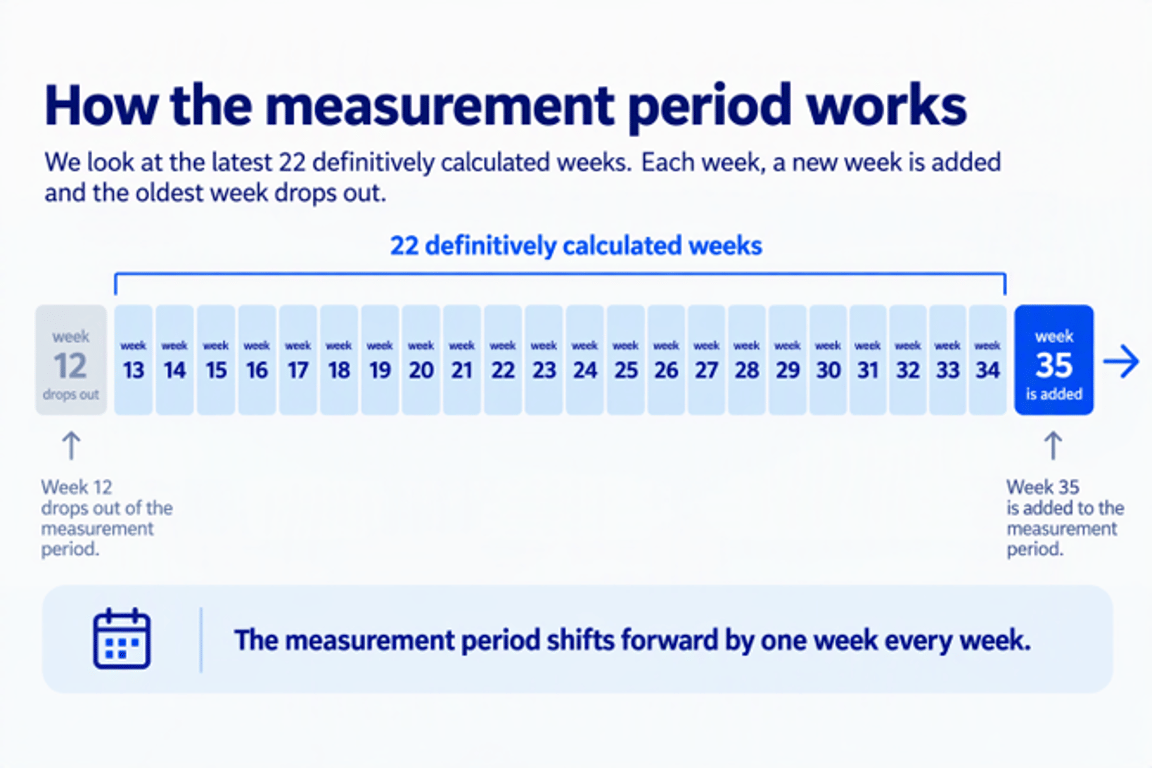
Example: when week 35 is definitely calculated, week 35 is added and week 12 drops out of the assessment period.
Why do we use strikes?
Customers must be able to rely on their order and the service they receive. Late deliveries, cancellations, and questions that remain unanswered for too long can reduce customer trust. This does not only affect that specific order, but also the trust in the overall offer via bol.
Pilots show that delivery promises are missed more often when there are no clear consequences for not meeting the target. That is why we use strikes as a warning when performance falls below the target.
At the same time, we know that you as a partner do your best to help customers well and that something can always go wrong. That is why wel ook for a good balance between:
- protecting customer trust;
- making it clear what can be improved;
- taking your situation into account if you perform well over a longer period;
- giving you the opportunity to improve your performance
Where can you see your performance and strikes?
In your seller account, on the Performance page, you will find:
- your performance per service standard;
- the target for each service standard;
- your current number of strikes;
- the weeks over which your strikes are calculated;
- whether a correction or protection has been applied;
- tips to improve your performance.
What you can do
Check your performance every week
See which service standard needs attention. Also check which orders have influenced your score.
Set a feasible delivery promise
Choose a delivery promise that matches your stock, processing time, and the agreements with your carrier. Check the More insights page in your seller account for advice on a suitable delivery promise.
Keep your stock up to date
Correct stock levels reduce the chance of having to cancel orders.
Answer customer questions on time
Ensure that questions from customers are answered within the agreed time.
Check your quality score
Your quality score shows your performance over 22 weeks. Regularly check your quality score and see which service standards need attention.
What role does your quality score play in strikes?
For strikes, we look at your weekly performance. Your quality score shows how you perform over a longer period.
A good quality score can therefore offer you benefits within the strike process. For example, with a quality score of 75 or higher for your own shipping, you can benefit from Strike Protection and Less chance of strikes. Want to know more about the service standards and tips to improve your score? Check the page about the quality score.
Three ways to prevent a strike or have it expire earlier
There are three ways to prevent a strike or have it expire earlier. The main difference is when you get certainty: protected beforehand, no strike afterwards, or having an existing strike expire earlier. The table shows which benefit applies when.